
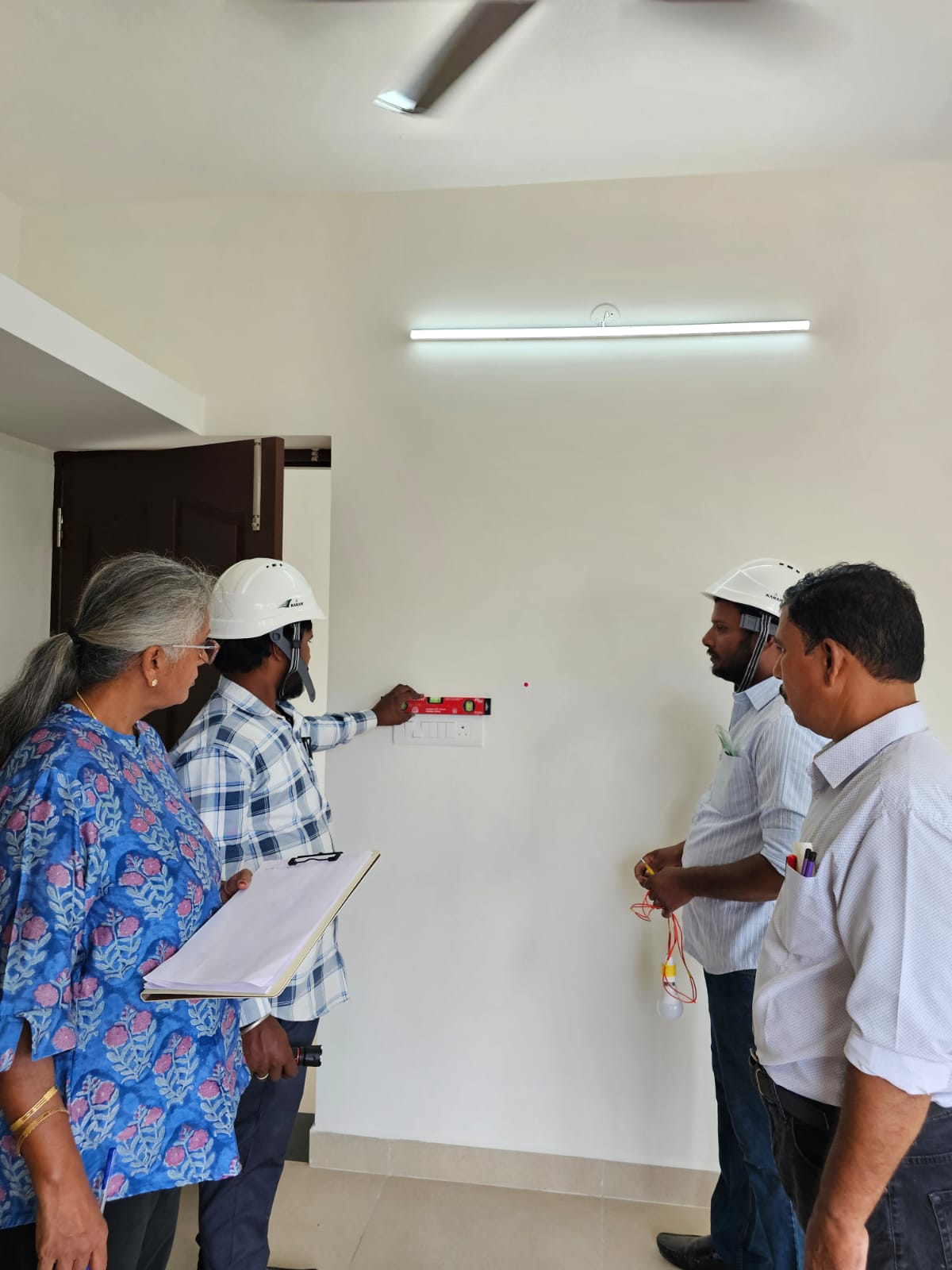

Handover day. After months or years of waiting, your builder has called you in to receive your new property. Documents are ready. Keys are waiting. Champagne is on ice. And the builder is asking you to sign the possession letter that confirms you’ve received the property in satisfactory condition. The moment you sign that letter, your negotiating position changes forever — and any defects you didn’t identify in advance become your problem to fix at your cost.
This guide gives you the complete property handover checklist — what to verify before you sign anything, what documents to collect, what defects to identify, and exactly how to use a professional handover inspection to protect yourself at this critical moment. If you have a handover scheduled in the coming weeks or months, print this guide and follow it step by step.
The possession letter is the most important document you’ll sign in your property purchase journey. Once signed, you’ve legally confirmed satisfaction with the property’s condition. Whatever defects you didn’t catch are now yours. Treat handover day with the seriousness this signing deserves.
Why Handover Day Is the Most Strategic Moment in Property Purchase
Most buyers approach handover as a celebration. Builders structure the experience to encourage this — friendly handover ceremonies, document folders, photo opportunities. Beneath the celebration, however, lies a critical legal moment that determines your future negotiating position for years to come:
Why Handover Day Matters More Than You Think |
✓ Possession letter is a legal acknowledgment of satisfactory delivery |
✓ Builder’s defect liability period starts from handover date |
✓ Defects identified BEFORE handover are typically builder’s responsibility |
✓ Defects identified AFTER signing become buyer responsibility unless in warranty |
✓ Your leverage with the builder is at its maximum right before handover |
✓ Builder has strong incentive to complete handover and move on to next sale |
✓ Documentation gaps at handover create permanent dispute risks |
✓ Handover sets the baseline for all future warranty and insurance matters |
The Pre-Handover Inspection: Your Single Most Important Step
Before you set foot in the property for handover documentation, you should have already commissioned and received a comprehensive professional snagging inspection. This inspection — ideally completed 7–14 days before the scheduled handover date — identifies every defect that needs to be addressed by the builder before you sign possession.
Pre-Handover Inspection Scope
A professional pre-handover inspection covers:
- Every room and area of the property, systematically
- All visible structural elements and finishes
- All electrical systems and fixtures with operational testing
- All plumbing systems and fixtures with flow and drainage testing
- HVAC systems with operational verification
- Waterproofing assessment in all wet areas
- External areas, balconies, and any private outdoor spaces
- Common area condition (for apartments) where buyer rights exist
- Thermal imaging for hidden moisture and insulation issues
- Compliance with contracted specifications and inclusions
Why Professional Inspection Beats DIY Walkthrough
Many buyers assume they can identify defects through their own careful walkthrough on handover day. The reality is consistently disappointing:
Professional Pre-Handover Inspection | DIY Walkthrough at Handover |
Systematic methodology covering every element | Limited to obvious visible issues |
Thermal imaging detects hidden moisture and issues | No technical detection capability |
Trained eye recognises construction defects | Untrained eye misses construction-specific defects |
Detailed photographic documentation | Inconsistent documentation, often just memory |
Severity classification for prioritisation | All defects feel equally important or equally minor |
Conducted in advance with builder still motivated | Rushed on handover day with builder present |
Independent professional with no conflict of interest | Buyer is emotionally invested in the property |
Comprehensive report for legal documentation | No formal documentation for builder claims |
The Complete Document Verification Checklist
Before signing anything at handover, verify you have received every document you’re entitled to:
Essential Documents to Verify at Handover |
✓ Possession letter (DO NOT sign until inspection is complete and acceptable) |
✓ Conveyance deed or sale deed verified by your conveyancer |
✓ Completion certificate from local authority |
✓ Occupation certificate (OC) confirming legal occupancy permission |
✓ RERA registration certificate and project completion details |
✓ Building plan approvals and any modifications during construction |
✓ Society formation documents and management agreement |
✓ Property tax receipts and clearance from builder |
✓ Original receipts for all payments made through the purchase |
✓ No Objection Certificate (NOC) from society and local authorities |
✓ Warranty documents for all included fixtures and appliances |
✓ User manuals and service documentation for all equipment |
✓ Keys to all locks, mailboxes, parking, and storage areas |
✓ Access cards and credentials for security systems |
✓ Society membership documents and committee contact details |
Documents That Need Special Attention
Several documents require particularly careful review at handover:
Completion and Occupation Certificates: Verify that both completion certificate (CC) and occupation certificate (OC) have been issued by the relevant local authority. Many disputes arise when builders hand over properties without proper OC, exposing buyers to legal complications and difficulty obtaining utilities, insurance, and resale.
RERA Registration: Verify the project is RERA-registered and that registration is current. Note the RERA registration number for any future complaint requirements. RERA registration provides buyer protections that pre-RERA properties don’t have.
Builder-Buyer Agreement Verification: Compare the actual property to the specifications in your builder-buyer agreement. Material variations from specification — different materials, missing features, reduced amenities — are grounds for builder accountability that should be raised before signing possession.
The Physical Verification Checklist
Beyond documents, verify the physical property element by element. Use this as your handover-day checklist alongside your pre-handover inspection report:
Structural and General
- Walls: any cracks beyond normal hairline settlement?
- Floors: level, no bouncing, no visible damage?
- Ceilings: no staining, no visible water damage?
- Doors: all operate smoothly, latch properly, lock correctly?
- Windows: all operate, seal properly, glazing intact?
Electrical Systems
- Switchboard: properly labelled, all circuits functional?
- RCD safety switches: present and operational?
- All electrical outlets: operational and correctly polarised?
- Lighting: all fixtures operate from designated switches?
- Smoke alarms: present, operational, correctly located?
- Air conditioning units: all operate correctly?
- Ceiling fans: all operate at all speeds?
Plumbing Systems
- All taps: operate, adequate pressure, no leaks?
- Hot water: arrives at adequate temperature?
- Drainage: all sinks, basins, showers drain freely?
- Toilets: flush properly, no leaks, no running cisterns?
- Hot water unit: operating, no visible leaks, accessible?
- Water meter: location confirmed, baseline reading recorded?
Bathroom and Wet Areas
- Tile work: no cracks, hollow tiles, or gaps?
- Grout: complete, no missing or damaged sections?
- Silicone sealing: complete at all wall-floor junctions?
- Floor falls: water drains to floor waste, no pooling?
- Shower screens: properly sealed, drainage adequate?
- Exhaust fans: operational, correctly ducted to exterior?
Kitchen
- Cabinets: all doors operate, no damage to finish?
- Countertops: no chips, cracks, or staining?
- Sink: drainage adequate, no leaks at trap?
- Rangehood: operational, ducting correct?
- Gas/electric connection: as specified, operational?
- Dishwasher connection: properly installed if applicable?
Outdoor Areas (Where Applicable)
- Balcony: drainage adequate, waterproofing intact, railing secure?
- Terrace: same as balcony plus access to common spaces?
- Parking: designated parking accessible, condition acceptable?
- Garden areas: as specified, drainage adequate?
- Outdoor lighting: operational?
The Snag List: Formal Documentation
Any defects identified during inspection — whether through professional inspection or your own verification — must be formally documented in a snag list:
- List every defect with specific location and description
- Classify by severity: safety hazard, major, minor, cosmetic
- Include photographs of each defect
- Reference the inspection report providing professional documentation
- Request specific timeline for rectification
- Get builder representative to acknowledge the list in writing
- Retain copy with builder’s signature acknowledging receipt
Negotiating at Handover: Strategic Options
When the snag list reveals significant issues, you have several strategic options:
Strategic Option | When to Use It | Considerations |
Decline possession until rectified | Major defects affecting livability | Strongest position; document refusal reasons |
Possession with documented snag list | Minor defects with builder commitment | Builder rectifies during defects liability period |
Conditional possession with timeline | Mixed major/minor defects | Specific rectification timeline in writing |
Price adjustment in lieu of rectification | Defects you’d prefer to fix yourself | Document financial settlement clearly |
Escrow arrangement for major items | High-value rectification work | Funds held until verified rectification |
Full rejection requiring builder action | Critical safety/structural defects | Last resort; legal advice essential |
Common Builder Tactics at Handover
Builders have learned to manage handover day to encourage buyer compliance and minimise defect documentation. Recognise these tactics:
- Time pressure: ‘We need to complete handover today’ — there’s never genuine urgency that warrants signing without verification
- Celebratory atmosphere: festive handover ceremonies that discourage technical inspection
- Single representative: only one builder rep present to limit accountability
- Documentation bundle: voluminous papers that discourage detailed review
- Defects minimisation: ‘Don’t worry, we’ll fix that during defects liability’ without written commitment
- Friendly relationship building: making complaint feel personally awkward
- Verbal commitments: promises made verbally that aren’t documented
None of these tactics are inherently nefarious — builders are managing thousands of transactions. But your job at handover is to protect your interests, not to make the builder’s logistics easier. Take the time you need.
Post-Handover: The Critical First Weeks
Once you’ve signed possession — assuming you proceeded — the first weeks of ownership are critical for ongoing protection:
Critical First-Week Post-Handover Actions |
✓ Live in the property and identify any operational issues emerging through use |
✓ Test every system thoroughly during normal occupation patterns |
✓ Document any newly emerged defects formally to the builder |
✓ Set up utility accounts and verify service quality |
✓ Photograph property condition for insurance baseline |
✓ Verify common area access and society procedures |
✓ Establish builder customer service contact for ongoing defect reporting |
✓ Confirm warranty registration for all major fittings and equipment |
SnagMash360 Pre-Handover Inspection Services
SnagMash360 (snagmash360.in) provides specialised pre-handover inspection services for new property buyers across India. Our handover inspection methodology is specifically designed for this critical moment — comprehensive scope, thermal imaging for hidden issues, professional documentation that builders take seriously, and timing aligned with your handover schedule.
We work with individual buyers, family offices coordinating multiple handovers, NRI buyers requiring remote handover verification, and developers establishing handover quality standards. Our reports are formatted specifically for handover negotiation, with clear severity classifications that support your decisions about possession acceptance.
Don’t Sign Possession Until SnagMash360 Has Inspected Your possession letter signature is a one-way door. Once signed, defects become your problem unless documented in advance. SnagMash360’s pre-handover inspection identifies every issue while builder accountability is at its maximum — protecting your purchase at its most critical moment. Visit snagmash360.in or email info@snagmash360.in to schedule your pre-handover inspection. |
Frequently Asked Questions
How far in advance should I schedule pre-handover inspection?
Schedule the inspection 7–14 days before your scheduled handover date. This gives the inspector time to conduct thorough assessment and produce detailed report, while leaving you time to submit findings to the builder and negotiate rectification before the scheduled signing date.
Can the builder refuse access for pre-handover inspection?
Reputable builders welcome buyer inspection — the property is being delivered to you, after all. Refusal of access is itself a significant warning sign worth raising with your conveyancer and possibly RERA authorities. In any case, you should not sign possession without inspection access.
What if the builder insists I sign before all snag items are addressed?
This is the most common handover pressure scenario. Your options: refuse to sign until critical items are addressed; sign with documented snag list and builder commitment to rectify within defects liability period; or sign conditionally with specific timeline and consequences for non-rectification. Consult your conveyancer if pressure becomes excessive.
What’s the difference between a snag list and the defects liability period?
A snag list documents items identified at handover that should be addressed before or shortly after possession. The defects liability period is the longer formal warranty period (typically 1 year general, 5 years structural) during which builder remains accountable for newly emerging defects. Both are important; both require documentation.
How do I find home inspection companies near me for handover inspection?
Specifically search for inspectors with snagging or pre-handover inspection experience — this is different from standard pre-purchase inspection methodology. SnagMash360 has dedicated handover inspection expertise across India — visit snagmash360.in for details.