
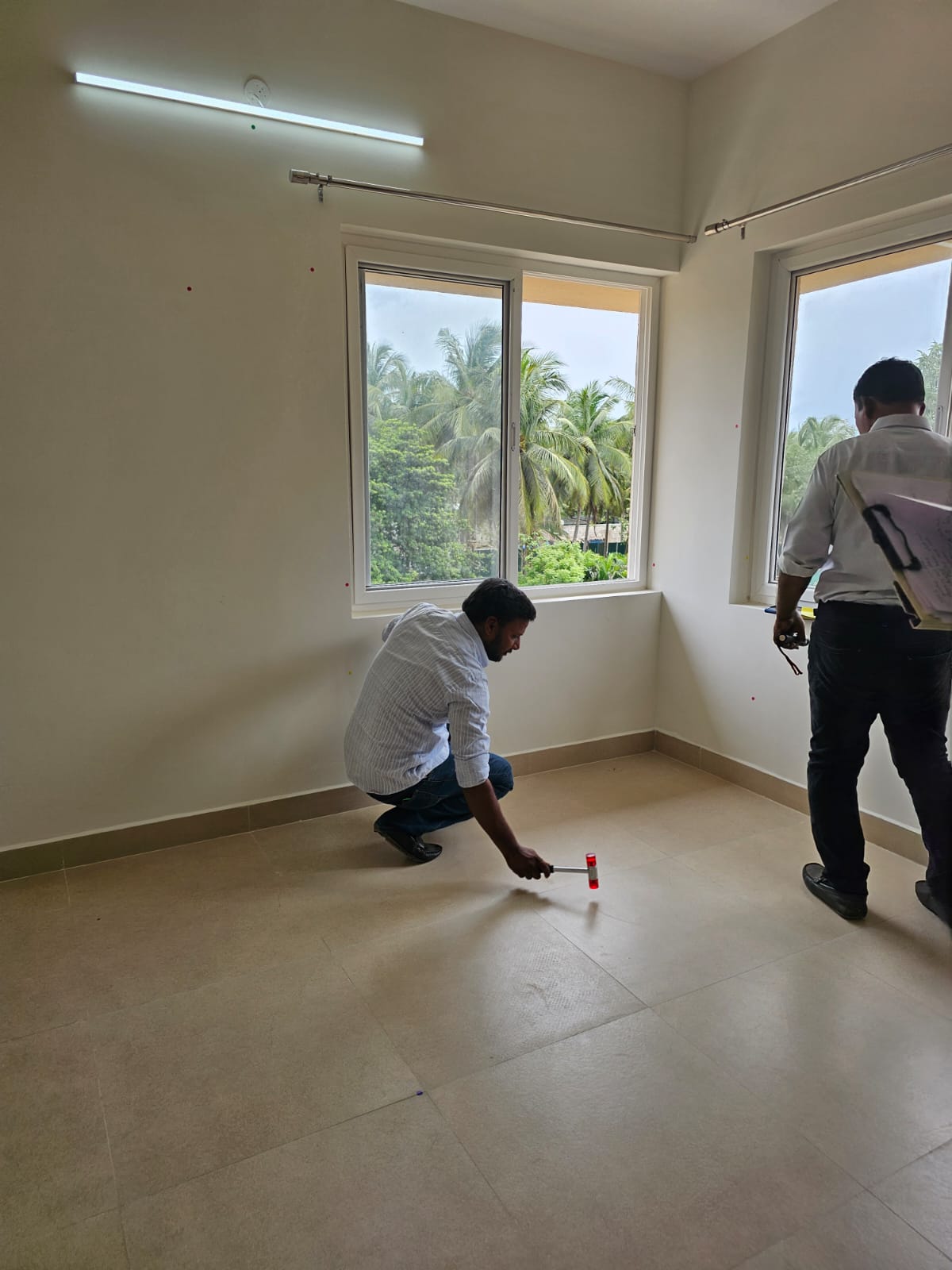

Property inspection has been transformed in the last decade by technology that simply didn’t exist a generation ago. Drones now inspect roofs and facades that no inspector could safely access. Thermal imaging cameras detect moisture and electrical problems invisible to the naked eye. AI-powered analysis identifies defect patterns that experienced inspectors might miss. Together these technologies have made modern inspection radically more thorough — and exposed how inadequate traditional visual-only inspection really was.
This guide walks through the most important inspection technologies in 2025, explains what each one actually does, and helps you understand which technologies you should specifically require from your home inspector. If you’re hiring an inspector who still relies primarily on a torch, a clipboard, and ‘experience’ — you’re paying for an inspection methodology that’s a generation behind.
The gap between a tech-equipped inspection and a traditional visual inspection isn’t incremental. It’s the difference between finding what’s actually wrong with a property and missing the most expensive defects entirely.
The Inspection Technology Revolution: A Brief History
For most of the history of professional property inspection, the inspector’s tools were essentially a torch, a screwdriver, a moisture meter (if you were lucky), and accumulated experience. Detection of any defect required physical visual access. Anything hidden behind walls, beneath floors, or above ceilings remained largely invisible. The result was that inspections missed enormous categories of significant defects — not because inspectors were incompetent, but because the technology to detect concealed defects didn’t exist.
That changed rapidly over the last 10–15 years:
- Thermal imaging cameras became affordable, portable, and sensitive enough for inspection use around 2010
- Drone technology suitable for property inspection emerged around 2015
- Digital reporting platforms with photo integration replaced paper reports through the late 2010s
- AI-assisted defect identification began appearing in inspection software around 2022
- Combined-technology inspection methodology became the professional standard by 2025
Thermal Imaging: The Single Most Important Inspection Technology
If you take only one technology recommendation from this guide, make it this: never accept a property inspection that doesn’t include thermal imaging home inspection capability. Infrared technology has transformed what’s possible in detecting concealed defects more than any other single inspection advancement.
How Thermal Imaging Actually Works
Thermal imaging cameras detect infrared radiation emitted by all objects — radiation that varies with the object’s temperature. The camera converts these temperature variations into a visual image where different temperatures appear as different colours. Because moisture, missing insulation, electrical faults, and active termites all create distinct temperature signatures, an infrared camera makes the previously invisible visible.
What Thermal Imaging Reveals That Visual Inspection Cannot
Thermal Imaging Findings: Invisible to the Naked Eye |
✓ Moisture trapped inside walls, ceilings, and beneath flooring — before any visible staining |
✓ Missing or compressed insulation in walls and ceilings — appearing as cold spots in winter, hot spots in summer |
✓ Active electrical hotspots in switchboards, distribution boards, and major appliances |
✓ Loose or failing electrical connections within wall cavities and ceiling spaces |
✓ Active plumbing leaks under concrete slabs and behind walls — pinpointed precisely |
✓ Active termite workings in wall framing — heat signature of colony activity |
✓ Underfloor heating system failures and cold spots in heated floors |
✓ Air leakage paths through the building envelope |
✓ Window and door seal failures |
✓ Inadequate ventilation pathways revealed by humidity buildup patterns |
The Cost-Benefit Analysis of Thermal Imaging
Adding thermal imaging to a property inspection typically costs ₹4,000–₹10,000 — modest in the context of total inspection cost and trivial against typical property values. The defects identified routinely include findings worth tens of thousands or lakhs of rupees in remediation cost. Thermal imaging is one of the highest-ROI components of modern property inspection.
Drone Technology: Inspection Where Humans Can’t Safely Go
Drones have made it possible to inspect property elements that were previously inaccessible — or accessible only at significant safety risk. Modern inspection-grade drones carry high-resolution cameras and sometimes thermal imaging payloads, capturing detailed imagery of roofs, facades, towers, and other elevated property elements.
What Drones Enable in Property Inspection
Drone Application | Why It Matters | What It Replaces |
Roof inspection at height | Detailed assessment of steep, fragile, or high roofs | Limited ground-level assessment or risky ladder access |
Facade inspection of multi-storey | Assessment of high-rise external walls and fittings | Inaccessible upper-level facade inspection |
Industrial chimney/tower inspection | Specialist structures inspection without scaffolding | Specialist rope-access teams at higher cost |
Roof valley and complex roofs | Detailed valley flashing and ridge inspection | Walking complex roofs at fall risk |
Drainage and stormwater paths | Aerial view of site drainage patterns | Ground-level guesswork about site drainage |
Construction stage verification | Aerial documentation of build progress | Limited ground-level construction assessment |
When Drone Inspection Is Genuinely Valuable
Drone inspection adds the most value for properties where height, complexity, or safety make traditional roof access impractical:
- Multi-storey houses with complex rooflines
- High-rise apartments where facade and balcony assessment matters
- Properties with steep tile or slate roofs that cannot be safely walked
- Heritage properties with fragile roofing materials
- Industrial or commercial property with tall structures
- Properties with skylights, plant rooms, or roof-mounted equipment at height
- Any property where the standard inspection report notes ‘roof not safely accessible — recommend further inspection’
AI-Powered Defect Recognition: The Newest Frontier
Artificial intelligence has begun appearing in property inspection software, with applications including automatic defect identification in photographs, pattern recognition for structural movement, and predictive analysis based on property characteristics. AI doesn’t replace the inspector but augments their capabilities meaningfully.
Current AI Applications in Property Inspection
How AI Is Being Used in Modern Inspection (2025) |
✓ Automatic defect identification: AI scans photos and flags potential issues for inspector review |
✓ Pattern recognition: identifying structural crack patterns and movement signatures |
✓ Comparable analysis: comparing findings to large databases of similar properties |
✓ Thermal image analysis: automatic identification of moisture and insulation anomalies |
✓ Report generation: automated drafting of standard report sections based on findings |
✓ Predictive maintenance forecasting: estimating remaining useful life of property systems |
✓ Quality assurance: AI-checked report consistency and completeness |
What AI Cannot Replace
Despite the genuine value of AI augmentation, certain aspects of property inspection remain firmly the inspector’s responsibility:
- Physical access and direct examination of property elements
- Tactile assessment — tapping for hollow tiles, feeling for moisture, probing for soft timber
- Contextual judgement about whether a finding is significant given the specific property
- Discussion with the buyer about findings and their implications
- Professional accountability and legal responsibility for the inspection report
- Adapting inspection methodology to specific property characteristics
The right model is AI-augmented inspection — where AI enhances the inspector’s capability without replacing the human judgement and physical examination that remain essential.
Moisture Detection: Beyond Simple Moisture Meters
Moisture detection in property inspection has progressed significantly beyond the basic moisture meter. Modern inspection uses multiple complementary moisture detection methods:
Traditional Moisture Detection | Modern Multi-Modal Moisture Detection |
Basic resistance moisture meter | Pin-type and pinless capacitance meters |
Surface measurement only | Thermal imaging for hidden moisture mapping |
Limited to accessible surfaces | Borescope cameras for inside wall investigation |
Spot measurements at suspected locations | Comprehensive area scanning, not just spots |
Reading interpretation requires experience | Cross-validation between methods |
Cannot map moisture extent | Detailed moisture extent mapping |
No record of measurement history | Digital records linked to specific locations |
Drainage Investigation: CCTV and Beyond
Underground drainage inspection has been transformed by CCTV camera technology. Modern drain inspection cameras provide:
- High-resolution video of internal drain conditions
- Distance measurement to identified problems
- Recording capability for documentation and second opinion
- Capability for very long drainage runs from a single access point
- Ability to identify specific issues: blockages, root infiltration, joint failures, pipe collapse
For older properties especially, CCTV drain inspection is genuinely transformative. Drainage problems that previously required excavation to diagnose can now be precisely located and assessed before any excavation begins, allowing precise targeting of repair work and avoiding speculative excavation.
Digital Reporting Platforms: The End of Paper Inspection Reports
Modern home inspection reports are delivered through digital platforms that provide significant advantages over traditional paper reports:
What Modern Digital Inspection Reports Offer |
✓ Interactive photo integration — every finding linked to specific photographs and locations |
✓ Searchable content — finding specific issues across long reports instantly |
✓ Severity filtering — viewing only safety hazards or only major defects |
✓ Sharing functionality — secure links for sharing with buyers, lawyers, and contractors |
✓ Mobile-friendly format — accessing the report on any device |
✓ Update capability — addition of post-inspection clarifications or addendums |
✓ Archive integration — building inspection history over time for ongoing ownership |
✓ Comparison tools — comparing current condition to previous inspection findings |
Specialised Inspection Technologies
Borescope and Endoscope Cameras
For investigation of internal wall cavities, ducts, and other enclosed spaces, borescope cameras provide direct visual access through small access holes. These tools are particularly valuable for:
- Investigating moisture sources identified by thermal imaging
- Verifying electrical or plumbing routing within walls
- Inspecting roof spaces with restricted access
- Investigating ventilation duct condition
- Documenting concealed structural elements
3D Scanning and Documentation
For high-value properties and detailed renovation planning, 3D laser scanning creates a precise digital model of the entire property. This technology provides:
- Accurate measurement and dimensioning
- Detailed structural documentation
- Reference baseline for tracking changes over time
- Design and renovation planning foundation
- Forensic documentation for insurance or legal purposes
Air Quality and Environmental Testing
Property inspection now extends beyond physical structure to indoor environmental quality:
- Mould spore testing for properties with known moisture history
- Asbestos sampling and laboratory analysis
- Lead paint testing in older properties
- Radon testing where applicable
- Volatile organic compound (VOC) testing in new builds
- Air quality monitoring in properties with respiratory concerns
How to Evaluate an Inspector’s Technology Capability
When choosing between home inspection companies, technology capability is a meaningful differentiator. Ask specifically:
- What thermal imaging equipment do you use, and is it included in standard service or as an add-on?
- Do you have drone capability for complex or inaccessible roofs?
- What moisture detection methods do you use? Just a basic meter or multi-modal detection?
- Do your reports include integrated photographs with location references?
- Can your reports be shared digitally with my conveyancer and contractors?
- Do you offer CCTV drain inspection capability or referral?
- How current is your inspection equipment? Recent generations matter for accuracy.
The Cost of Technology-Equipped Inspection
Technology Component | Value Delivered |
Thermal imaging | Identifies defects |
Drone roof/facade inspection | Access where no other method works |
CCTV drain inspection | Pinpoints drainage defects without excavation |
AI-augmented analysis | Augments inspector findings |
Digital reporting platform | Better usability, sharing, archiving |
Borescope investigation | Direct visual access to concealed spaces |
Air quality testing | Health-relevant findings |
When Technology Doesn’t Help
It’s worth noting that not every inspection benefits equally from every technology. Inspection technology is most valuable when properly matched to property characteristics and likely defect risks. Some scenarios where less technology suffices:
- Very new build apartments in their first months — most concealed defects haven’t had time to emerge
- Properties with extensive recent renovation where new systems are fully documented
- Simple property layouts without complex roofs, multiple bathrooms, or significant outdoor elements
- Short-period DLP inspections where comprehensive baseline was established at handover
The right approach is to match inspection technology to property risk profile — comprehensive technology deployment for older properties, complex properties, and high-value purchases; selective technology use for simpler scenarios.
SnagMash360: Technology-Equipped Inspection Across India
SnagMash360 (snagmash360.in) deploys current-generation inspection technology on every property assessment — including professional thermal imaging cameras, drone capability for complex roofs, multi-modal moisture detection, and digital reporting platforms with full photographic integration. We don’t treat technology as a premium add-on for special inspections; we treat it as the modern standard for all inspections.
Our inspectors are trained in interpreting findings across multiple inspection technologies — not just operating equipment, but understanding what findings mean for buyers, sellers, investors, and existing owners. The technology serves the inspector’s judgement; the inspector’s judgement serves the client.
Demand Modern Inspection Technology — Choose SnagMash360 Don’t accept inspection methodology from a previous generation. SnagMash360 deploys thermal imaging, drone inspection, multi-modal moisture detection, and AI-augmented reporting on every inspection — finding what traditional visual-only methodology misses entirely. Visit snagmash360.in or email info@snagmash360.in to discuss your inspection requirements. |
Frequently Asked Questions
Is thermal imaging really necessary or is it just marketing?
Thermal imaging has documented value across thousands of inspections — it consistently identifies moisture intrusion, electrical hotspots, and insulation issues that visual inspection cannot detect. For any property purchase decision, the marginal cost of thermal imaging is small compared to the value of the findings it routinely produces.
Do I need drone inspection for every property?
No — drone inspection is most valuable for properties where roof or facade access is genuinely difficult or unsafe. For straightforward single-storey houses with accessible roofs, drone inspection adds marginal value. For multi-storey, complex, steep, or fragile roofs, drone inspection can be the only way to thoroughly assess these critical elements.
Is AI-powered inspection more accurate than human inspection?
AI augments inspection accuracy but doesn’t replace human inspection. AI is excellent at consistency and pattern recognition; humans excel at contextual judgement and physical examination. The best modern inspections combine AI assistance with experienced inspector judgement — neither alone is as effective as the combination.
How do I find home inspection companies near me with current technology?
Ask specifically about thermal imaging, drone capability, and digital reporting before booking. Companies that have invested in current-generation technology mention it proactively in their service descriptions. SnagMash360 deploys modern technology on every inspection across India — visit snagmash360.in for details.
Will inspection technology continue evolving?
Yes — inspection technology is in active evolution. AI-augmented analysis, improved thermal imaging sensitivity, better drone capabilities, and integrated multi-sensor inspection platforms are all advancing. Choosing inspectors who invest in technology adoption ensures you benefit from these advances over time.