
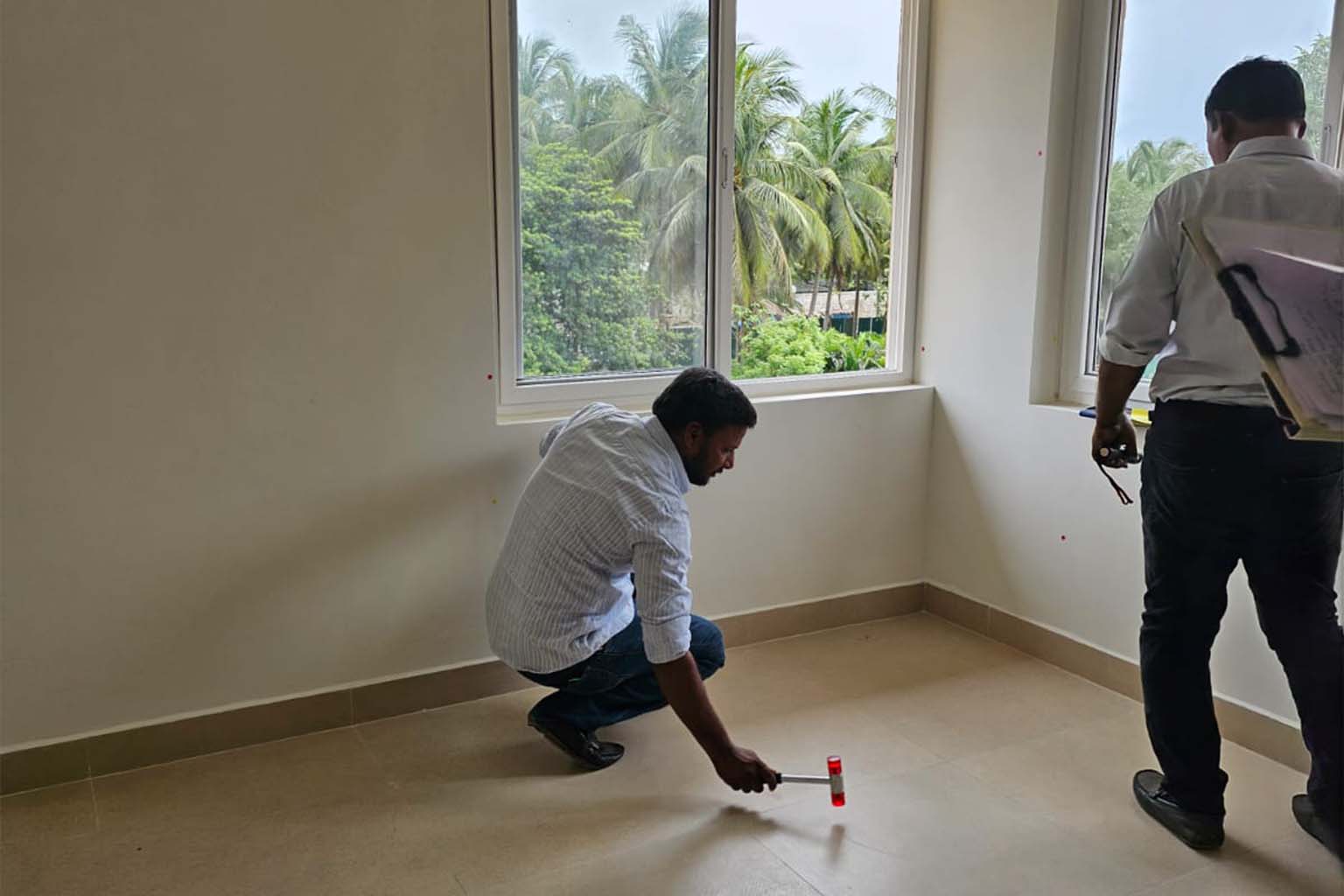

The new home smell. The unmarked walls. The gleaming fixtures and spotless floors. Everything about a brand-new property signals quality, modernity, and a clean financial slate. This is exactly why so many new home buyers skip the inspection — and exactly why doing so is one of the most expensive mistakes in property. New does not mean defect-free. In fact, new construction often harbors defects that are more difficult to detect and more expensive to fix than those found in older properties.
This guide exposes the most common new construction defects, explains why new home inspections near me are essential at every stage of the build process, and tells you exactly what your builder’s site supervisor and the council building inspector are not checking — but an independent new home inspector will.
The Myth of the Defect-Free New Build
Industry data consistently shows that the majority of newly constructed residential properties contain defects at the time of practical completion. Many of these defects are minor — finishing issues, paint touch-ups, hardware adjustments. But a significant proportion are major: waterproofing failures, structural frame deficiencies, substandard electrical work, and drainage design errors that will cost far more to fix after settlement than they would have cost to prevent during construction.
New builds are built by people, under time and cost pressure, often by subcontractors with varying quality standards. The council inspector checks compliance at specific stages — they don’t check everything. Your inspector does.
Why New Builds Have More Defects Than Many Buyers Expect |
✓ Construction is done under time and cost pressure — quality shortcuts are common |
✓ Multiple subcontractors work sequentially with limited quality handover between trades |
✓ Council building inspections check code compliance at specific stages only — not every detail |
✓ Builder site supervisors manage multiple sites simultaneously — on-site supervision is limited |
✓ Warranty periods create a perverse incentive: problems hidden at handover may not emerge until post-warranty |
✓ Modern lightweight construction uses thinner tolerances — small errors compound quickly |
✓ Off-the-plan specifications allow substitution of materials — not always disclosed to buyers |
The 7 Most Common New Construction Defects Found at Inspection
1. Waterproofing Failures
Waterproofing failures are the single most common serious defect in new residential construction. Bathrooms, laundries, balconies, and any other wet area require a continuous, properly installed waterproofing membrane beneath tiles and floor coverings. When this membrane is poorly installed — incomplete coverage, insufficient upturns at wall junctions, inadequate bond to substrate — water penetrates beneath the tile surface and causes progressive structural damage.
The insidious aspect of waterproofing failures in new builds is their timeline. A poorly installed membrane typically doesn’t fail visibly until 12–24 months after occupation — long enough that the defect cannot be linked to the original installation by a casual observer, but typically well within builder warranty periods for buyers who have documented the issue properly.
2. Structural Frame Defects
The structural frame is installed and inspected at frame stage — but frame inspection by an independent new home inspector at this stage consistently reveals defects that the council inspector misses or considers outside their scope:
- Missing or incorrectly placed bracing: structural wall bracing is critical for wind and racking resistance — errors here are not visible after wall lining is installed
- Incorrect fixings: framing connections that use incorrect nail or screw specifications have reduced structural capacity
- Damaged or inadequate timber: frame timber with excessive knots, splits, or below-specification grade reduces structural performance
- Incorrectly spaced members: stud spacing, joist spans, and rafter sizing must comply with structural specifications
3. Roofing and Drainage Design Errors
New build roofing defects differ from older property roof defects — they are typically not age-related deterioration but design and installation errors. Common new construction roof defects include:
- Insufficient roof pitch for the tile or sheet product specified — causes water backup and penetration
- Incorrectly installed flashings at wall junctions, penetrations, and valley gutters
- Inadequate or incorrectly sized storm water drainage — results in overflow during normal rainfall events
- Ridge capping bedded with incorrect mortar or over-bedded — failures emerge within 2–5 years
- Missing or incorrectly installed sarking — the underlay beneath tiles is critical for secondary water management
4. Electrical Installation Defects
Electrical subcontractors in new construction work under significant time pressure. The result is that electrical installation defects — which would constitute serious safety hazards in any existing property — are found regularly in new builds at inspection. Specific findings include:
- Missing safety switches (RCDs) on power or lighting circuits — mandatory under current standards
- Incorrectly terminated connections — loose connections in junction boxes or switchboard
- Damaged cable insulation from penetration through framing — particularly around sharp metal brackets
- Outlets installed without backing blocks — loose outlets that shift in the wall
- Switchboard labelling errors — circuits identified incorrectly, creating safety confusion
5. Plumbing and Hot Water System Issues
Plumbing defects in new construction are predominantly installation errors rather than material failures. Common findings in new home inspections include:
- Insufficient water pressure — incorrectly sized supply pipes or pressure limiting valve set too low
- Slow drainage — incorrect fall on waste pipes or inadequate trap design
- Hot water unit commissioning errors — incorrect temperature setting, relief valve not tested
- Shower and bath traps installed at incorrect height — causes inadequate water seal and odour
- Missing access panels for concealed plumbing — creates a maintenance liability for the life of the building
6. Insulation Deficiencies
Insulation in new construction is installed by a subcontractor and is concealed by wall lining and ceiling plasterboard before any practical completion inspection can reach it. Insulation deficiencies are therefore among the most reliably hidden defects in new builds — and one of the highest-value applications of thermal imaging home inspection technology.
An infrared home inspection of a newly completed property maps the thermal performance of walls and ceiling, identifying areas of missing, compressed, or incorrectly installed insulation that would otherwise remain hidden for the life of the building. The energy efficiency and comfort implications of widespread insulation gaps are significant — and the cost of rectification after lining is installed is far higher than correct installation would have been.
7. External Drainage and Site Works
External drainage is among the most frequently deficient elements of new residential construction. Site drainage design determines whether water runs away from the building — or toward it. Common defects include:
- Insufficient fall away from the building — surface water pools against the foundation
- Stormwater downpipes discharging onto the surface rather than to pit or drain
- Retaining wall drainage absent or inadequate — hydrostatic pressure builds behind walls
- Subfloor ventilation inadequate — moisture accumulates and creates termite-attractive conditions
The Stage Inspection Program: Your Builder’s Warranty Is Only as Good as Your Documentation
Builder warranty coverage for new construction typically includes structural defects for a significant period — commonly 6–7 years — and non-structural defects for a shorter period, often 12 months to 2 years. But warranty coverage only applies to defects that are formally documented within the warranty period.
This is why the stage inspection program is the most important inspection investment a new home buyer can make. By commissioning independent inspections at each construction stage, you create contemporaneous documentation of defects that:
- Compels the builder to rectify defects while each stage is still accessible and within contract obligations
- Creates a formal record of any defects that were not rectified before the next stage — preserving your warranty claim rights
- Documents the quality of work at each stage against the contract specifications
- Provides evidence in the event of a warranty dispute after practical completion
Build Stage | Independent Inspection Focus | Why This Stage Matters |
Pre-slab / base | Soil preparation, reinforcement layout, drainage, formwork | Foundation errors are most expensive post-pour — this is the only window |
Frame stage | Timber quality, bracing, fixings, member sizing and spacing | Frame is concealed after this — only chance for structural verification |
Pre-plaster / lock-up | Electrical rough-in, plumbing, insulation, waterproofing membranes | All concealed works — last access before lining installation |
Practical completion | Full inspection of completed property before settlement | Final opportunity to compel builder rectification under contract |
3-month defects liability | Defects appearing after occupation | Builder remains liable — document formally and promptly |
What Council Building Inspectors Check — and What They Don’t
Many new home buyers assume that council building inspections — the statutory inspections conducted by the local authority at key construction stages — provide equivalent protection to an independent new home inspection. They don’t. Understanding the difference is critical:
Council Building Inspection | Independent New Home Inspection |
Checks compliance with the Building Code at specific notifiable stages | Checks code compliance AND specification, quality, and workmanship |
Inspector visits briefly — typically 30–60 minutes | Inspector spends 2–4 hours — comprehensive, systematic assessment |
Focused on structural and safety minimums only | Full scope: structure, services, finishes, drainage, insulation, waterproofing |
Does not check finish quality, specification compliance, or workmanship detail | Detailed photographic report documents every finding with severity rating |
Council inspector serves the public interest — not the buyer’s individual interest | Works exclusively for the buyer — reports to buyer’s interests |
No detailed written report provided to the buyer | 40–80 page report with photographs delivered within 24 hours |
Cannot compel builder to fix non-code issues found by buyer’s inspector | Findings create formal basis to compel builder rectification under contract |
New Home Inspection Cost vs Builder Warranty Recovery
The new home inspection cost for a full stage program — covering slab, frame, lock-up, practical completion, and defects liability review — depending on property size and number of stages. Against the purchase price of a new home and the potential cost of undocumented defects, this is modest.
Consider a single waterproofing failure: bathroom waterproofing to full rectification standard — removing tiles, replacing membrane, reinstating — A single such defect, found at the lock-up inspection and compelled to be rectified by the builder at no cost, represents a recovery of 2–3 times the full inspection program cost.
For investors purchasing new build properties, the economics are even clearer: an undocumented defect that emerges after warranty expiry is entirely the investor’s cost burden — affecting yield, tenant safety liability, and capital value simultaneously.
Finding New Home Inspectors Near You
When searching for new home inspectors near me, look specifically for inspectors with documented experience in new construction — not just resale property. The defect categories, construction standards, and warranty framework for new builds are specific, and an inspector without new build experience may lack the frame of reference to identify construction-phase defects accurately.
Ask specifically:
- How many new build inspections have you conducted?
- Are you familiar with the current National Construction Code requirements applicable to new residential builds?
- Do you offer stage inspections throughout the build process, not just practical completion?
- Can you provide a sample new build inspection report showing the level of detail for construction-phase findings?
SnagMash360: New Home Inspection Specialists
SnagMash360 (snagmash360.in) provides dedicated new home inspection services for buyers and investors across India — from pre-slab through to post-defects liability review. Our inspectors are trained in current construction standards and common new build defect categories, and use thermal imaging cameras to document insulation and waterproofing deficiencies that visual inspection cannot find.
We deliver detailed, photographic stage inspection reports within 24 hours — giving buyers and their builders clear, documented findings that create the formal record needed to enforce warranty obligations and protect your purchase.
New Home? Don’t Settle Without an Independent Inspection. SnagMash360 provides comprehensive new build stage inspections and practical completion inspections that document every defect — giving you the formal evidence to compel builder rectification before settlement and protect your warranty rights for the life of the coverage period. Visit snagmash360.in or email info@snagmash360.in to book your new home inspection. |
Frequently Asked Questions
My builder says everything is built to code. Do I still need an inspection?
Yes — unequivocally. Code compliance is a minimum standard, not a quality guarantee. Many building specifications require quality above code minimums. Additionally, council building inspections do not verify every element of construction — they check specified notifiable stages for code compliance, not comprehensive quality. An independent new home inspection is the only way to verify quality and specification compliance comprehensively.
Can I use new home inspection findings to delay settlement?
Yes — if significant defects are identified at the practical completion inspection, you are entitled to withhold settlement until agreed defects are rectified to a satisfactory standard. Your contract of sale and any relevant building warranty legislation in your jurisdiction specify the precise rights and processes — consult your solicitor or conveyancer about your specific situation.
What is the defects liability period and how does inspection support it?
The defects liability period is the time after practical completion during which the builder remains responsible for rectifying defects that appear. Typically 3 months to 1 year for non-structural defects. A defects liability inspection — conducted around the end of this period — formally documents all remaining or newly emerged defects, creating the evidence needed to make a warranty claim before your rights under this period expire.
Does a new apartment need inspection as much as a new house?
Yes. Apartment construction is subject to the same quality issues as house construction — often compounded by the complexity of multi-story construction and the larger number of subcontractors involved. Waterproofing, electrical, plumbing, and insulation defects are found regularly in new apartments. The practical completion inspection is the most important stage for apartment buyers who do not have access to earlier build stages.