

Buying off-plan property — committing to purchase a home that doesn’t yet physically exist — is one of the highest-trust transactions in all of property. You’re paying significant money based entirely on promises: glossy brochures, computer-generated images, sample apartments, and the developer’s claimed track record. The single most important due diligence you can do is verify those claims. Not through the developer’s own marketing, but through independent inspection of properties the developer has already completed.
This guide explains exactly how a builder quality audit works, what it can tell you that no developer brochure ever will, and how to use this verification process to dramatically reduce the risk of off-plan property purchase. If you’re considering any off-plan or under-construction property purchase, this is essential reading.
Past performance isn’t a guarantee of future results — but in property development, it’s the strongest predictor we have. A developer’s previous completed projects tell you everything you need to know about what your project is likely to deliver. The question is whether you’ll find out before or after you sign.
What Is a Builder Quality Audit?
A builder quality audit — also called a developer track record verification or builder reputation inspection — is a systematic professional assessment of multiple previously completed projects by the developer you’re considering buying from. Rather than inspecting the property you’re buying (which doesn’t yet exist), you’re inspecting evidence of what this developer actually delivers when their construction work is complete.
The audit typically covers:
- Inspection of 2–5 of the developer’s recently completed projects
- Random sample apartments from those projects (not the show flats)
- Common areas, infrastructure, and amenities
- Conversations with actual occupants about their experience
- Review of any visible build quality patterns across projects
- Documentation of recurring defect types if any emerge
- Assessment of how the developer handles defect rectification
This audit is conducted independently of the developer — by professional inspectors working for the prospective buyer. The findings provide an evidence base far stronger than any developer marketing material or verbal assurance.
Why Off-Plan Buyers Need This Verification
Off-plan property purchases have specific risk characteristics that make verification particularly important:
Why Off-Plan Property Purchase Is Higher Risk |
✓ Significant payment committed before property physical existence |
✓ Long completion timelines (typically 2–5 years) create financial exposure |
✓ No physical property to inspect at purchase decision time |
✓ Limited contractual remedies if quality falls short of expectations |
✓ Builder may make changes to specifications during construction |
✓ Quality at completion depends entirely on builder’s track record |
✓ Buyer’s leverage is greatest before payment is committed |
✓ Difficulty assessing build quality from marketing materials alone |
What the Builder Quality Audit Reveals
1. Actual Construction Quality (Not Marketing Quality)
Developer marketing materials, brochures, and sample apartments are professional theatre. They show what the developer wants you to see — typically the highest-quality finishes possible, in carefully controlled conditions. The builder quality audit shows what the developer actually delivers across their normal production:
- Are the finishes shown in the brochure delivered consistently in actual apartments?
- Is the workmanship quality maintained across the entire project?
- Do the materials and specifications in the contract match what’s actually installed?
- Are the dimensions, layouts, and features delivered as designed?
- How does year-1 quality compare to year-3 condition?
2. Patterns of Recurring Defects
Across multiple inspected projects, certain defect patterns may emerge that indicate systemic issues with the developer’s construction approach:
Concerning Recurring Patterns | Generally Acceptable Variations |
Waterproofing failures consistently appearing across projects | Minor cosmetic differences between apartments |
Similar structural cracking patterns indicating design or execution issues | Normal settling cracking within expected parameters |
Recurring electrical issues suggesting systemic subcontractor problems | Resident-caused damage or modifications |
Drainage problems repeating across different building types | Maintenance-related issues from owner neglect |
Common area finishes deteriorating prematurely | Variations in finish quality reflecting different price points |
Documented unresolved warranty claims at multiple projects | Normal wear patterns proportional to building age |
Similar resident complaints about identifiable defect categories | Resident complaints clearly unrelated to construction quality |
3. Builder’s Response to Identified Issues
Equally important to what defects exist is how the developer responded to them. The audit assesses:
- Were major defects rectified promptly during the defects liability period?
- Did the developer engage constructively or defensively with resident complaints?
- Are there ongoing unresolved warranty matters?
- How accessible is the developer’s customer service post-handover?
- Does the developer maintain relationships with the property society over time?
4. Long-Term Building Performance
Inspecting projects 3, 5, or 10 years post-handover reveals long-term performance characteristics that new projects cannot:
- How has waterproofing held up over multiple monsoons?
- Are structural elements showing settlement or movement issues?
- How are mechanical systems (lifts, common HVAC, water pumps) performing?
- What is the common area maintenance burden looking like?
- Are external facades and finishes weathering well?
How a Builder Quality Audit Is Conducted
Project Selection
Effective auditing requires careful selection of projects to inspect:
- Select 3–5 projects representing different completion eras (recent, 2–3 years, 5+ years)
- Choose projects in similar price segments to the off-plan property you’re considering
- Include projects from similar geographic areas where comparable
- Mix project sizes if the developer builds varied project types
- Where possible, include the developer’s flagship and standard offerings
Access Coordination
Inspection access requires coordination with current owners or residents. This typically involves:
- Identifying residents willing to allow inspection access for fair compensation
- Coordinating with property societies for common area inspection
- Working through real estate agents who may have access to multiple units
- Property society approvals for non-resident inspectors
- Scheduling that respects resident schedules and privacy
Inspection Methodology
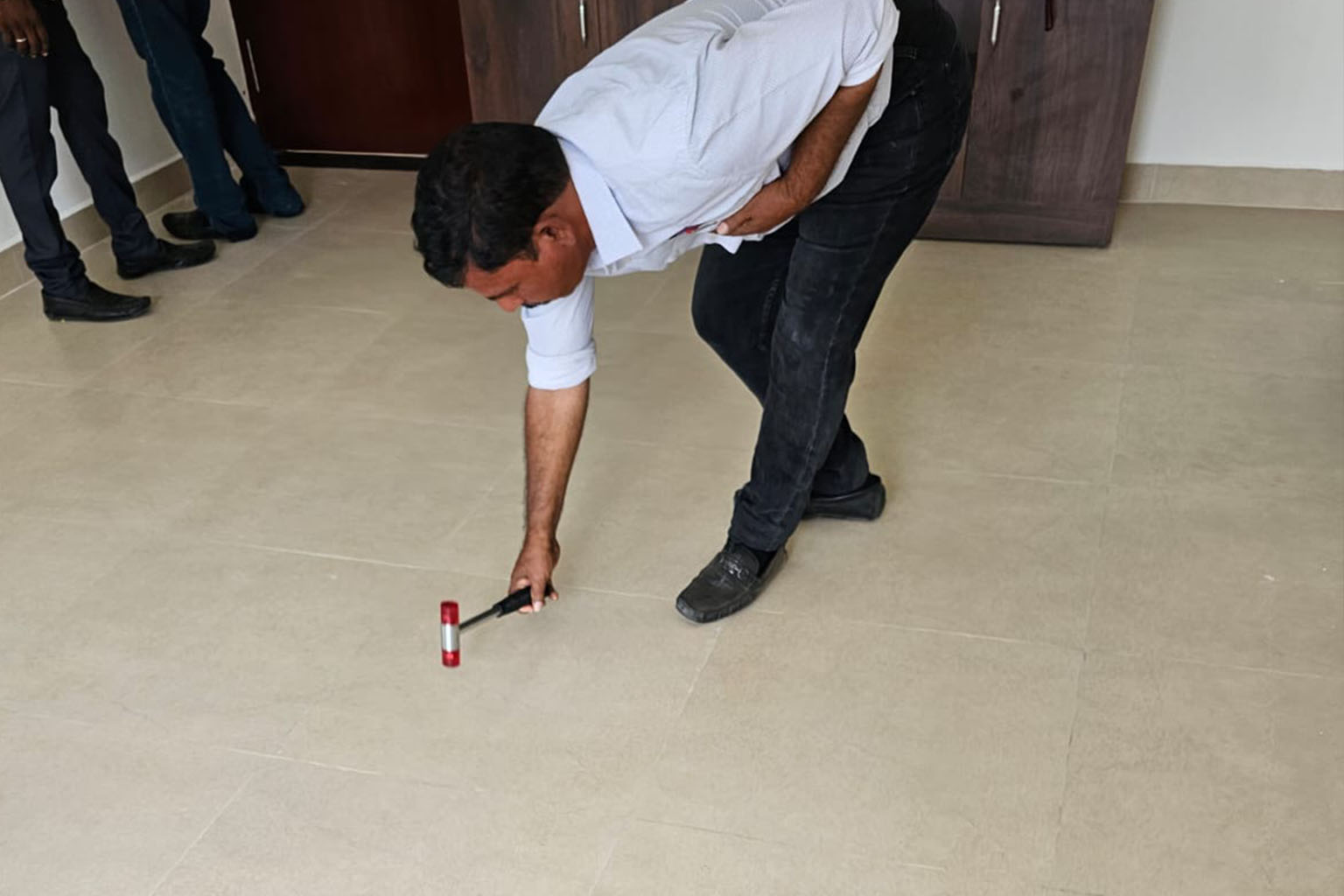
The audit inspection itself uses the same methodology as standard property inspection — building inspection, thermal imaging, structural assessment — but applied across multiple properties with comparative documentation:
Builder Quality Audit Inspection Scope |
✓ Standard building inspection of each selected unit |
✓ Thermal imaging assessment particularly of wet areas and external walls |
✓ Common area inspection: lobbies, corridors, lifts, parking, amenities |
✓ External facade inspection including drone assessment where appropriate |
✓ Roof and waterproofing assessment particularly post-monsoon |
✓ Resident interviews about their experience with the developer |
✓ Society management interview about ongoing maintenance burden |
✓ Comparative documentation across all inspected projects |
Comparative Reporting
The audit produces not just individual inspection reports but a comparative analysis identifying patterns across the developer’s portfolio:
- Common defect categories appearing across projects
- Quality variation between projects of different price points or eras
- Pattern recognition for systemic versus isolated issues
- Developer responsiveness pattern documentation
- Overall risk assessment for the off-plan property
Interpreting Builder Quality Audit Findings
Audit findings inform your purchase decision in nuanced ways. Different finding patterns warrant different responses:
Finding Pattern | Implication for Off-Plan Decision | Recommended Action |
Excellent quality across all projects | Strong indicator of likely quality | Proceed with confidence, standard inspection at handover |
Variable quality between projects | Indicates inconsistent execution | Detailed contract specifications, premium inspection program |
Minor recurring issues only | Standard industry-level performance | Standard inspection program, awareness of common issues |
Major recurring defects | Systemic execution problems | Reconsider purchase, or require contractual quality guarantees |
Poor warranty responsiveness | Quality issues may not be remedied | Strong contract protections needed, or reconsider |
Long-term performance issues | Hidden costs may emerge years post-handover | Factor long-term costs into decision, premium DLP inspection |
When Builder Quality Audit Matters Most
Builder quality audit adds the most value in specific scenarios:
- First time purchasing from this developer — no personal experience to draw on
- Significant property value where due diligence proportionality matters
- Developer is relatively new without long track record
- Mixed online reviews creating uncertainty about developer reliability
- Specific concerns raised by other buyers, journalists, or industry observers
- Luxury or premium projects where quality expectations are particularly high
- Long completion timelines creating extended exposure to developer performance
- NRI buyers who cannot easily personally verify developer reputation
Combining Builder Audit with Other Off-Plan Protection
Builder quality audit is one element of comprehensive off-plan due diligence. Combined with other protections:
- RERA registration and compliance verification
- Builder financial stability assessment
- Title and approvals verification by qualified conveyancer
- Contract terms review by experienced property lawyer
- Stage inspection program during construction (where access permitted)
- Practical completion inspection at handover
- Snagging inspection before signing possession documents
- Defects liability period inspection before warranty expires
Together these protections substantially reduce off-plan property purchase risk compared to relying on developer assurances alone.
SnagMash360 Builder Quality Audit Services
SnagMash360 (snagmash360.in) provides specialised builder quality audit services for off-plan property buyers and investors across India. Our audits combine systematic multi-property inspection with developer responsiveness assessment, long-term performance analysis, and comparative reporting that gives you a clear evidence base for your off-plan purchase decision.
We work with individual buyers, investor groups, real estate consultants, and family offices who recognise that the cost of comprehensive developer verification is trivial against the risk of major off-plan purchase mistakes. Our audit reports are detailed, photographic, and structured for genuine decision support.
Verify the Developer Before You Commit — Builder Quality Audit Don’t buy off-plan based on brochures and promises. SnagMash360 conducts comprehensive builder quality audits across India — inspecting the developer’s actual completed projects and giving you the evidence base your investment deserves. Visit snagmash360.in or email info@snagmash360.in to discuss your builder quality audit needs. |
Frequently Asked Questions
Will the developer object to me commissioning a builder quality audit?
Reputable developers welcome quality verification by potential buyers — it’s an opportunity to demonstrate their actual delivery quality. Developers who object to this kind of due diligence are signalling something important about their confidence in their work. Either way, the audit is your right as a buyer; you don’t require developer permission.
How do I get access to inspect completed projects?
Inspection access requires coordination with residents in completed projects. Inspection companies experienced in builder audits maintain relationships and methodologies for arranging this access. Some access comes through informal networks, some through paid arrangements with willing residents, some through coordination with property societies.
Can the developer pay for or arrange the audit?
This defeats the purpose. The audit must be independent — commissioned and paid for by the prospective buyer, with results reported directly to the buyer. Developer-arranged audits have inherent conflicts of interest that undermine their value.
How long does a builder quality audit take?
Typically 2–4 weeks from commissioning to comprehensive report delivery, depending on number of projects audited and access coordination complexity. Plan accordingly when off-plan purchase timelines are tight.
How do I find home inspection companies near me with builder audit experience?
Specifically ask: ‘Have you conducted builder quality audits comparing multiple completed projects?’ Many home inspection companies haven’t done this specific work — it requires different methodology than single-property inspection. SnagMash360 has dedicated builder audit expertise — visit snagmash360.in for details.